
I knew I had lost control.
And the worst part? I’d let it happen.
It always started the same way.
Bath. Pajamas. Stories (if I had energy).
Then the meltdown.
She wanted her tablet. Again.
And I gave in. Again.
Because I was too tired. Too stretched. Too done arguing.
I told myself, "It’s just for a few minutes. Just until she drifts off."
But it wasn’t.
It turned into 45 minutes of swiping, flashing, clicking.
And when I tried to take it away… she screamed like I’d ripped her heart out.
I sat outside her door, listening to her cry.
And then I started crying too.
I used to say I’d never let screens raise my kid.
I said I’d read to her. Be present. Build her imagination.
But somewhere along the way, I got tired.
Work, house stuff, life… it all added up.
And I leaned on screens more than I wanted to.
Now, bedtime wasn’t peaceful. It was a negotiation.
And she wouldn’t sleep without the tablet.
Not with me. Not without it.
It wasn’t just about sleep.
It was the way she stopped asking for stories.
The way she zoned out more. Talked less. Imagined less.
The way she reached for a screen before she reached for me.
And the guilt? It was eating me alive.
So I started looking for something—anything—to help.
I didn’t want another screen. I wanted a way out.
They’re overstimulating the nervous system.
Every swipe, beep, and flash? It fires up the brain.
Not down. Not calm. Not sleep.
That’s why kids scream when the tablet goes away.
They’re not calming down. They’re winding up.
We think we’re helping them relax… but we’re really making it harder for them to self-soothe.
And most of the “solutions” out there? Just more passive input. More noise. More control from outside the child.
A mom in one of my parenting groups said:
"My daughter used to scream when we took the tablet away. Now she puts herself to sleep with Jules."
Jules?
I was curious.
So I looked it up.
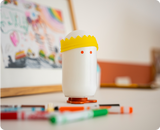
Not an app.
Not a glowing cube.
Not a playlist.
It’s a smart storyteller that actually listens to your child.
You turn it on.
It starts telling an interactive story.
Your child gets to talk, answer, imagine.
No lights. No screens. No overstimulation.
Just storytime that adapts to your child’s responses.
And best of all?
It helps their brain wind down, not up.
She picked a story. The voice was warm. Calming.
Jules asked her a question.
She answered.
Then another.
She whispered back.
After the story, we went to bed calm and without any disagreement.
No meltdowns.
No tablet.
No guilt.
Here’s why Jules worked when everything else failed:
- It doesn’t overstimulate. It slows the brain down.
- It’s interactive. Your child isn’t just listening. They’re part of the story.
- It’s predictable. Same comforting voice. Same calming tone. No surprises.
- It builds imagination. Not addiction.
And me?
I finally felt like I had my evenings back.
She wasn’t begging for a screen.
She wasn’t screaming.
She was excited for storytime.
And I didn’t have to do anything.
No guilt. No negotiations. Just peace.
- No screen. At all.
- No open Internet access.
- Smart, adaptive storytelling that engages your child
- Voice interaction to build language + imagination
- Created by parents + child experts
- Works out of the box. No setup headaches.
It’s about giving your child a calm mind.
It’s about giving you a break that feels good.
It’s about feeling like the parent you wanted to be.
Jules is still in limited early access.
That means short runs, high demand, and priority pricing right now.
No stress. No guilt.